English ivy care: growing it indoors, pet safety and removal
Short answer
Indoors, English ivy likes bright light without direct sun, cool rooms of about 50–70 °F, and a rich, well-drained potting mix. Water thoroughly, then let just the top half inch dry. Feed monthly while it is growing, and check often for spider mites. It is toxic to cats, dogs and horses, and outdoors it is invasive in the U.S.[1, 2, 3, 4]
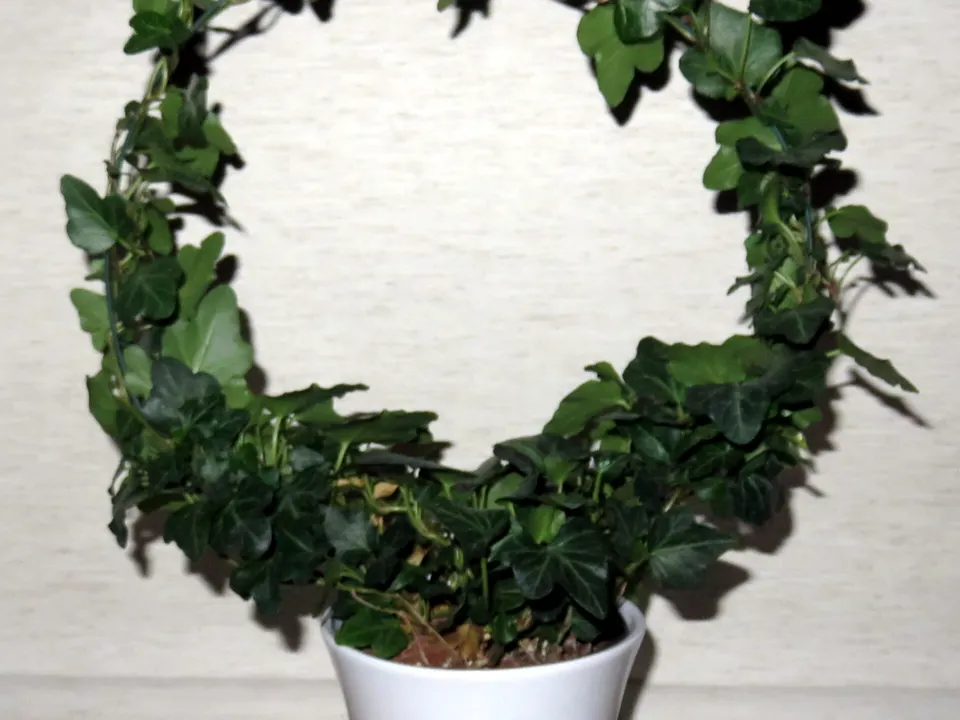
English ivy care at a glance
| Light | Bright light, no direct sun |
|---|---|
| Watering | Moist, but never standing in water |
| Soil and pots | Rich potting mix, good drainage |
| Humidity | Moderate; tolerates normal home air |
| Temperature | 50–70 °F by day, a little cooler at night |
| Feeding | Monthly while it is actively growing |
| Repotting | When top-heavy or root-bound; 1 inch bigger |
| Pruning and topiary | Pinch tips for a bushy plant |
| Propagation | Stem or tip cuttings, often in water |
| Outdoors: invasive, and how to remove it | Invasive in the U.S.; remove it from trees |
| Pets | Yes: toxic to cats, dogs and horses |
Light
- Give it bright light, but not direct sun. A north, east or west window, or artificial light, works. [1, 2]
- It tolerates low to medium light, but grows less, and variegated types may turn all green. [1]
Watering
- Clemson: water thoroughly, then let the top half inch of soil dry before watering again. [1]
- Illinois: keep the soil moist. Both advise against soggy soil: never let the pot stand in water. [1, 2]
- Too much or too little water is one of its main problems; overwatering or a poorly drained mix leads to root rot. [1]
Soil and pots
- Use a good, rich commercial houseplant potting mix in a container with good drainage. [1, 2]
Humidity
- It prefers moderate humidity but tolerates the low humidity of most homes. [1, 2]
- To raise humidity, stand the pot on a tray of wet pebbles. Give it good air circulation and don’t crowd plants. [1]
Temperature
- It likes cool rooms: 50–70 °F by day and about 5–10 °F cooler at night. [1, 2]
- Cooler temperatures and higher humidity help keep some pests away, though growth slows. [1]
Feeding
- Feed monthly with a foliage houseplant fertilizer while it is actively growing, as the label directs. [1]
- Don’t feed when growth stops, in summer heat or in cool weather. [1]
Repotting
- Repot when it becomes top-heavy or root-bound, or dries out too fast. [1]
- Choose a pot no more than 1 inch wider: a bigger pot keeps the soil wet too long and can cause root rot. [1]
Pruning and topiary
- Pinch the shoot tips often for a bushy plant, and start training it while it is small. [2]
- Indoors it can be pruned to almost any size. Small-leaved, slow types suit small pots and wire topiary forms. [1]
- Some people get a rash from the sap: wear gloves when pruning if you react. [1]
Propagation
- Root stem or tip cuttings; most types root easily in water. [1]
Outdoors: invasive, and how to remove it
- Outdoors, English ivy is invasive in the U.S. Birds eat the berries and spread the seeds, and seedlings grow fast. [3]
- Young seedlings are easy to pull by hand. Mowing, pulling or trimming stops it reaching the mature form that flowers and fruits. [3]
- To free a tree, cut every vine all the way around the trunk at about eye level, peel the vines down to the base, then pull the ivy back 3–5 feet from the trunk. The ivy left higher up dies over several months. [3]
- Dig out new sprouts as they reappear. Don’t compost ivy at home, where it can root again; use a municipal yard-debris facility. [3]
- Wear gloves and long sleeves until you know how your skin reacts: some people get a rash. [3]
Is English ivy toxic to cats and dogs?
- The ASPCA lists English ivy as toxic to dogs, cats and horses. The toxic compounds are saponins. [4]
- Signs include vomiting, abdominal pain, drooling and diarrhea. The leaves are more toxic than the berries. [4]
- If a pet eats some, call your vet or the ASPCA Animal Poison Control Center, (888) 426-4435. [4]
Compare with other plants in our pet-safe houseplant checker.
English ivy varieties
| Variety | What it looks like |
|---|---|
| 'Glacier' | Silvery variegation with white edges. [1] |
| 'Gold Child' | Mottled green leaves with bright cream-yellow edges; larger and wider than other gold-edged types. [1] |
| 'Needlepoint' | A miniature bird’s-foot type with small pointed leaves, often used for topiary. [1] |
| 'Ivalace' | Glossy, blackish green curly leaves with wavy, crimped edges. [1] |
| 'Anne Marie' | Medium green with gray-green splotches and a creamy white edge. [1] |
| 'Buttercup' | Pale green in shade, bright yellow in sun. [1] |
| 'Kolibri' | Silver-white leaves flecked with green. [1] |
Common English ivy problems
| What you see | Usual cause |
|---|---|
| Fine speckles, webbing, dull leaves | Spider mites. Inspect often; wash the foliage with insecticidal soap. [1, 2] |
| Rotting roots, wilting | Overwatering or a poorly drained mix. [1] |
| Variegated leaves turning green | Too little light. [1] |
| Other pests | Mealybugs, aphids, whiteflies and scale. Prune out small infested areas. [1] |
Not sure what's wrong? Use the plant doctor to match what you see to a cause.
Questions people ask
Is English ivy toxic to cats?
Yes. The ASPCA lists English ivy as toxic to cats, dogs and horses. Eating it can cause vomiting, abdominal pain, drooling and diarrhea, and the leaves are more toxic than the berries. [4]
How do I get rid of English ivy in my yard?
Pull young plants by hand. On trees, cut every vine around the trunk at eye level, peel the vines down and clear a 3–5 foot circle at the base; the ivy above dies over several months. Dig out regrowth, and don’t compost ivy at home. [3]
Should I plant English ivy outdoors?
Think twice. Oregon State Extension describes English ivy as invasive in the U.S.: it was once a recommended groundcover, but birds eat its berries and spread the seeds, and the seedlings grow fast. [3]
How often should I water English ivy?
Sources differ slightly. Clemson says to water thoroughly once the top half inch of soil is dry; Illinois says to keep the soil moist. Either way, never leave it standing in water. [1, 2]
Sources
Facts on this page were checked against these sources on November 10, 2026. The wording is our own.
- Growing English Ivy Indoors (HGIC 1506). Clemson Cooperative Extension, Home & Garden Information Center. Revised Nov 16, 2015.
- English Ivy. University of Illinois Extension, Houseplants.
- Ivy removal in a home landscape (EM 9710). Oregon State University Extension Service. Reviewed 2026.
- Toxic and Non-Toxic Plants: English Ivy. ASPCA Animal Poison Control Center.
Spotted a mistake? Report an error and we'll check it against the sources and update the page.