Ponytail palm care: a drought-tough plant that isn’t a palm
Short answer
Despite its name, the ponytail palm isn’t a palm but a succulent: its swollen trunk stores water. Give it full sun or your brightest window, water deeply but infrequently and let it dry out in between, and water much less in winter. Use a cactus-type mix, feed once or twice in the growing season, and repot rarely. It’s non-toxic to cats and dogs.[1, 2, 3]
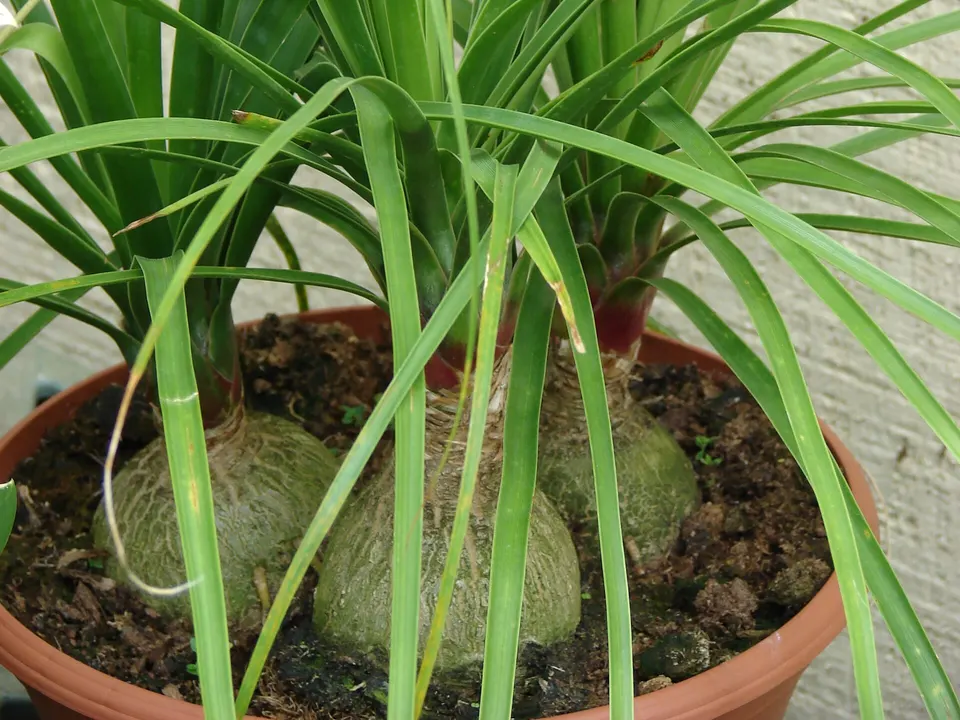
Ponytail palm care at a glance
| Light | Full sun or your brightest window |
|---|---|
| Watering | Deeply but infrequently; much less in winter |
| Soil and pots | Fast-draining, cactus-type mix |
| Temperature | Outdoors year-round only in zones 9–10 |
| Feeding | Once or twice in the growing season |
| Repotting | Rarely: it can go years between repottings |
| What it is, and how big it gets | A succulent with a water-storing trunk |
| Propagation | Only from seed |
| Pets | No: non-toxic to cats, dogs and horses |
Light
- It’s a desert plant adapted to bright light and does best in full sun. [1]
- Illinois Extension lists it among houseplants needing high or bright light. [2]
- It can go outdoors for summer, but move it out gradually to prevent sunburn. [1]
Watering
- Water deeply but infrequently, and let it dry out between waterings. [1]
- Cut watering right back in winter to avoid root rot. [1]
- Overwatering is the most common reason it fails. [1]
Soil and pots
- Use a well-drained mix like those for cactus, or add sharp sand or small gravel to regular potting mix. [1]
- It stays small in a small pot; a bigger pot gives it room to grow. [1]
Temperature
- It can live outdoors year-round only in USDA zones 9–10; elsewhere, grow it indoors and move it outside only for summer. [1]
Feeding
- Feed it just once or twice during the growing season. [1]
Repotting
- It can go many years without repotting. [1]
- Older plants get very heavy and hard to move. [1]
What it is, and how big it gets
- It isn’t a true palm but a succulent. Its swollen trunk stores water, so it survives long droughts. [1]
- It grows slowly in a container and stays much shorter there; in the ground it can reach 30 feet. [1]
Propagation
- It’s propagated only from seed, which isn’t easy to find; side shoots won’t root. [1]
- Sow seed in spring, at 68 °F or warmer. [1]
Is a ponytail palm toxic to pets?
- The ASPCA lists it (as bottle palm or elephant-foot tree) as non-toxic to dogs, cats and horses. [3]
Compare with other plants in our pet-safe houseplant checker.
Common ponytail palm problems
| What you see | Usual cause |
|---|---|
| Brown leaf tips | Too much or too little water, too much fertilizer or salt buildup. You can trim off the dead tips. [1] |
| Root rot | Too much water, especially in winter. [1] |
| Sunburned leaves | Moved into outdoor sun too quickly. [1] |
| Pests | Few, but mealybugs or scale can appear. [1] |
Not sure what's wrong? Use the plant doctor to match what you see to a cause.
Questions people ask
Is a ponytail palm a real palm?
No. It’s a succulent whose swollen trunk stores water, which is why it handles drought so well. [1]
How often should I water a ponytail palm?
Deeply but infrequently: let it dry out between waterings, and water much less in winter. [1]
Why are my ponytail palm’s leaf tips brown?
Too much or too little water, too much fertilizer or salt buildup. Trim the brown tips off for looks. [1]
Is a ponytail palm safe for cats and dogs?
Yes. The ASPCA lists it as non-toxic to dogs, cats and horses. [3]
When should I repot a ponytail palm?
Rarely; it can go many years in the same pot. Repot into a bigger one only if you want it to grow larger. [1]
Sources
Facts on this page were checked against these sources on November 6, 2026. The wording is our own.
- Ponytail Palm, Beaucarnea recurvata. University of Wisconsin–Madison Division of Extension, Wisconsin Horticulture.
- Lighting (houseplants by light level). University of Illinois Extension, Houseplants.
- Toxic and Non-Toxic Plants: Bottle Palm (Beaucarnea recurvata). ASPCA Animal Poison Control Center.
Spotted a mistake? Report an error and we'll check it against the sources and update the page.