African violet care: watering, light and keeping it in bloom
Short answer
Give African violets bright, indirect light, shaded from direct midday sun. Water moderately from spring to fall, letting the soil dry slightly, and water from below with warm water to keep the leaves and crown dry. Keep them at 70–75 °F by day and 60–65 °F at night, feed monthly with African violet fertilizer while they flower, and keep them slightly pot-bound. They’re non-toxic to pets.[1, 2, 3]
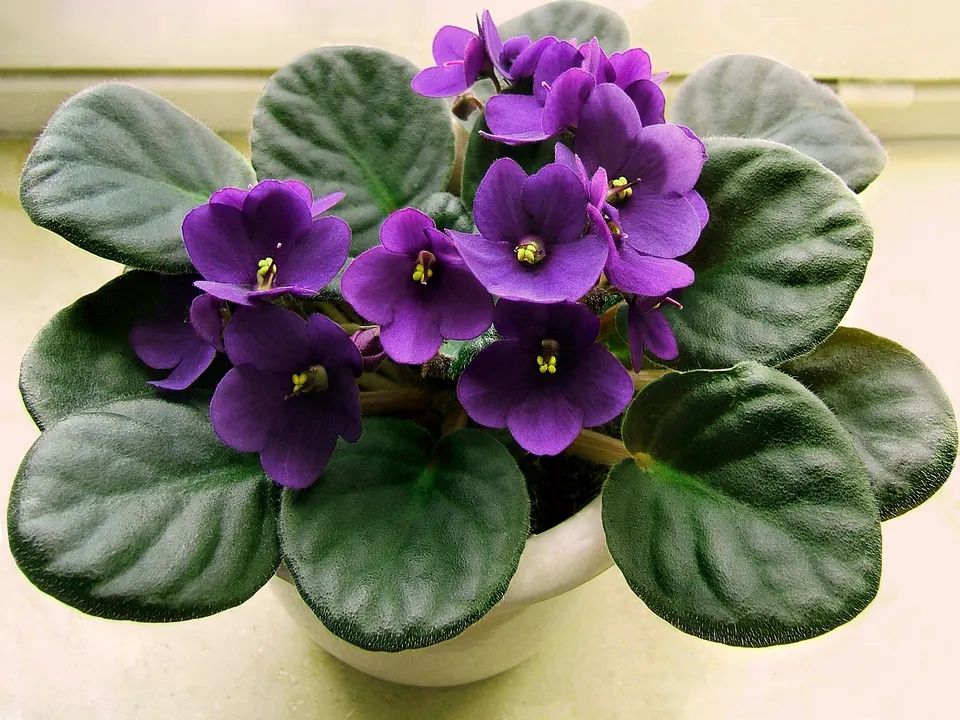
African violet care at a glance
| Light | Bright, indirect light; no midday sun |
|---|---|
| Watering | Moderately, from below, with warm water |
| Soil and pots | Well-drained soilless or African violet mix |
| Temperature | 70–75 °F days, 60–65 °F nights |
| Feeding | Monthly while flowering |
| Repotting | A pot about half the plant’s width |
| Grooming | Remove fading flowers and leaves |
| Flowers and size | Compact, blooming much of the year |
| Pets | No: non-toxic to dogs, cats and horses |
Light
- Give it bright, indirect light. [1, 2]
- Shade it from direct sun during peak hours, or the leaves will burn. [1]
- If it won’t set buds, it probably isn’t getting enough light. [1]
- In winter, fluorescent or full-spectrum lights 8–12 inches above the plants, on for 14–16 hours a day, may be needed. [1]
Watering
- Water moderately from spring until fall, letting the soil dry slightly between waterings; water a little less in winter. [1]
- Water from below: fill the saucer with warm water and let the plant soak it up for about 30 minutes. [1]
- Cold water on the leaves causes brown spots. [1]
- African violets are very prone to crown rot, which can kill them quickly: don’t overwater, don’t water into the crown, and don’t water at night. [1]
Soil and pots
- Use a well-drained, soilless potting mix or a ready-made African violet mix. [1]
Temperature
- It prefers 70–75 °F by day and 60–65 °F at night. [1]
- Keep it away from cold windows and drafts. [1]
Feeding
- While it’s flowering, feed once a month with an African violet fertilizer, following the label. [1]
Repotting
- Use a pot about half as wide as the plant’s spread. [1]
- Keep it slightly pot-bound to encourage flowering. [1]
Grooming
- Remove older flowers and leaves as they start to wither. This helps prevent gray mold (Botrytis). [1]
Flowers and size
- In the right conditions it blooms for much of the year, several times a year. [1, 2]
- Its compact size suits tabletops, windowsills and hanging baskets. [1]
Is African violet toxic to pets?
- The ASPCA lists African violets as non-toxic to dogs, cats and horses. [3]
- Clemson Extension includes them among houseplants that are safe for pets. [2]
Compare with other plants in our pet-safe houseplant checker.
African violet varieties
| Variety | What it looks like |
|---|---|
| Standard, miniature and trailing | Besides standard plants there are miniature and trailing varieties. [1] |
| Flower forms | Single, double, semi-double, fringed, star-shaped and Geneva flowers. [1] |
Common African violet problems
| What you see | Usual cause |
|---|---|
| Brown spots on the leaves | Cold water splashed on the leaves. [1] |
| Crown rotting, plant collapsing | Crown rot: overwatering, water in the crown, or watering at night. [1] |
| No flowers | Usually not enough light. [1] |
| Burned leaves | Direct sun during peak hours. [1] |
| Gray fuzzy mold | Gray mold (Botrytis) on fading flowers and leaves. Remove them as they wither. [1] |
Not sure what's wrong? Use the plant doctor to match what you see to a cause.
Questions people ask
How do I water an African violet?
From below: fill the saucer with warm water and let the plant soak for about 30 minutes. Let the soil dry slightly between waterings, and avoid wetting the leaves or crown. [1]
Why won’t my African violet bloom?
Most often it isn’t getting enough light. Bright, indirect light, with grow lights for 14–16 hours a day in winter if needed, and a slightly pot-bound root system help. [1]
Is African violet toxic to cats?
No. The ASPCA lists it as non-toxic to cats, dogs and horses. [3]
What size pot does an African violet need?
One about half as wide as the plant’s spread. Keeping it slightly pot-bound encourages flowering. [1]
Why does my African violet have brown spots on its leaves?
Usually cold water on the leaves. Water from below with warm water instead. [1]
Sources
Facts on this page were checked against these sources on November 6, 2026. The wording is our own.
- African Violets. University of Wisconsin–Madison Division of Extension, Wisconsin Horticulture. Revised Apr 26, 2010.
- Pet-Safe Indoor Houseplants: What’s Safe for Cats and Dogs. Clemson Cooperative Extension, Home & Garden Information Center. Jul 21, 2025.
- Toxic and Non-Toxic Plants: African Violet. ASPCA Animal Poison Control Center.
Spotted a mistake? Report an error and we'll check it against the sources and update the page.