Bird of paradise care: indoors, outdoors and getting blooms
Short answer
Bird of paradise needs as much light as you can give it: nearly full sun outdoors in summer (move it out gradually) and a sunny spot indoors in winter. Water thoroughly, then let it dry slightly; feed regularly in spring and summer; and keep it pot-bound, which encourages blooms. It is toxic to cats and dogs, mainly from the fruit and seeds.[1, 2, 3]
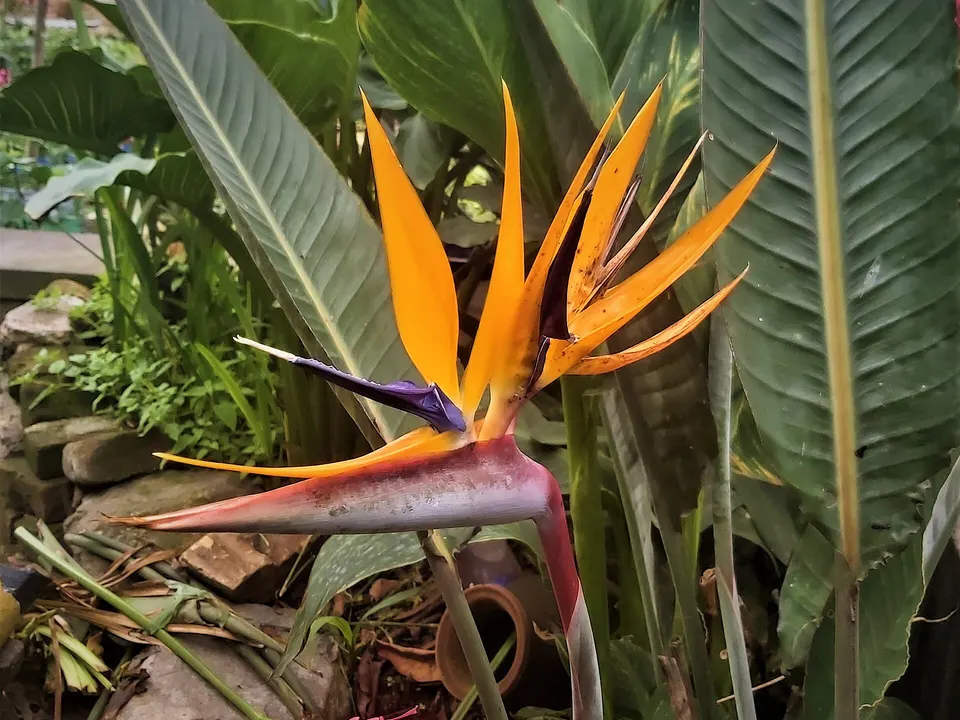
Bird of paradise care at a glance
| Light | As much as possible; full sun outdoors in summer |
|---|---|
| Watering | Soak, then let it dry slightly; less in winter |
| Soil and pots | Any well-draining mix |
| Humidity | Moderate, around 60% |
| Temperature | 65–70 °F days, 50–55 °F nights |
| Feeding | Often in spring and summer |
| Repotting | Rarely: it blooms better pot-bound |
| Cleaning the leaves | Wipe with a soft cloth; no leaf shine |
| Flowers and size | Slow-growing clump, about 5 feet |
| Propagation | Division is fastest; seed is very slow |
| Pets | Yes: mildly toxic to cats, dogs and horses |
Light
- It prefers full sun but tolerates lower light. [2]
- Give it a sunny spot indoors in winter, and as much light as possible if you want blooms. [1]
- It does best outdoors in summer in nearly full sun. Move it out gradually, or the leaves can sunburn. [1]
Watering
- Soak the potting mix thoroughly, then let it dry slightly before watering again. [2]
- Outdoors in summer, keep the soil moist; indoors, let the pot dry out between waterings. [1]
- Water less often in the colder, darker months. [2]
Soil and pots
- Any well-draining soil or soilless potting mix works. [1]
- Root rot usually comes from a mix that doesn’t drain quickly. [2]
Humidity
- It prefers moderate humidity, around 60%, which may mean daily misting in dry winter months. [2]
Temperature
- It prefers 65–70 °F by day and 50–55 °F at night. [2]
- If it spends summer outdoors, bring it in when temperatures start dropping below 60 °F. [2]
- It can survive brief cold down to about 28 °F. [1]
Feeding
- It is a heavy feeder, but guides differ: Wisconsin suggests every 2 weeks in summer and monthly in winter; Clemson suggests every 2 weeks in spring, weekly in summer and none in fall or winter. [1, 2]
- Too much fertilizer gives lots of leaves and few or no flowers. [2]
Repotting
- It blooms more when pot-bound, so don’t rush to repot. Replace the top layer of soil every year or so instead. [1]
- Repot only when necessary (for example, when the roots crack the pot), ideally in early spring. [1]
- Don’t plant it too deeply; leaving the tops of the roots exposed may even encourage flowering. [1]
Cleaning the leaves
- Wipe the large leaves with a soft cloth, but don’t use leaf-shine products. [1]
Flowers and size
- It is a slow-growing, clump-forming plant that reaches about 5 feet tall and wide. [1, 2]
- Flowers open one after another from late winter or early spring. [2]
- The most common reason a mature plant won’t bloom is too little light. [1]
Propagation
- Divide a plant that has bloomed for a few years by splitting its underground stems (rhizomes). [1, 2]
- Divisions should flower in two to three years. [2]
- Seed is slow: it can take 8 weeks or more to sprout and 4–10 years or more to bloom. [1, 2]
Is bird of paradise toxic to pets?
- The ASPCA lists bird of paradise (Strelitzia reginae) as toxic to dogs, cats and horses. It causes mild nausea, vomiting and drowsiness, mainly from the fruit and seeds. [3]
- Don’t confuse it with Caesalpinia gilliesii, a different shrub also called bird of paradise, which the ASPCA says is more toxic. [3, 4]
Compare with other plants in our pet-safe houseplant checker.
Bird of paradise varieties
| Variety | What it looks like |
|---|---|
| Orange bird of paradise (S. reginae) | The one usually meant by “bird of paradise”; grows to about 5 feet tall and wide. [2] |
| White or giant bird of paradise (S. nicolai, S. alba) | Much larger, tree-like species that can reach 30 feet and bloom only when quite mature. [1, 2] |
Common bird of paradise problems
| What you see | Usual cause |
|---|---|
| No flowers | Usually too little light; too much fertilizer also gives leaves instead of flowers. [1, 2] |
| Root rot | A potting mix that doesn’t drain quickly. [2] |
| Sunburned leaves | Moved into outdoor sun too quickly. [1] |
| Pests | Mealybugs, scale, spider mites, whiteflies and aphids. [1, 2] |
Not sure what's wrong? Use the plant doctor to match what you see to a cause.
Questions people ask
Is bird of paradise toxic to cats and dogs?
Yes, mildly. The ASPCA lists it as toxic to dogs, cats and horses, causing mild nausea, vomiting and drowsiness, mainly from the fruit and seeds. [3]
Why won’t my bird of paradise bloom?
Most often it isn’t getting enough light. Too much fertilizer and repotting into a roomy pot can also hold back flowers. [1, 2]
How often should I fertilize bird of paradise?
Every 2 weeks during the growing season, more in summer. Guides differ on winter: Wisconsin feeds monthly, Clemson not at all. [1, 2]
Can bird of paradise grow indoors?
Yes, in your sunniest spot. It does best if it can spend summer outdoors in nearly full sun. [1, 2]
When should I repot bird of paradise?
Only when it really needs it, in early spring; it blooms better pot-bound. Replace the top layer of soil yearly instead. [1]
Sources
Facts on this page were checked against these sources on November 6, 2026. The wording is our own.
- Bird of Paradise, Strelitzia reginae. University of Wisconsin–Madison Division of Extension, Wisconsin Horticulture. Revised Sep 2026.
- Bird of Paradise (HGIC 1562). Clemson Cooperative Extension, Home & Garden Information Center. Published Mar 20, 2004.
- Toxic and Non-Toxic Plants: Bird of Paradise Flower (Strelitzia reginae). ASPCA Animal Poison Control Center.
- Toxic and Non-Toxic Plants: Bird of Paradise (Caesalpinia gilliesii). ASPCA Animal Poison Control Center.
Spotted a mistake? Report an error and we'll check it against the sources and update the page.