Snake plant care: light, watering and soil
Short answer
Snake plants do best in bright, indirect light and tolerate low light, but keep them out of hot, direct sun. Let the soil dry out before watering: about every 2 to 4 weeks in spring and summer and every 4 to 6 weeks in fall and winter. Overwatering, which leads to root rot, is the most common way to kill one. Use a cactus mix or a mix with perlite in a pot with drainage holes, and keep the plant away from cats and dogs.[1, 2, 5]
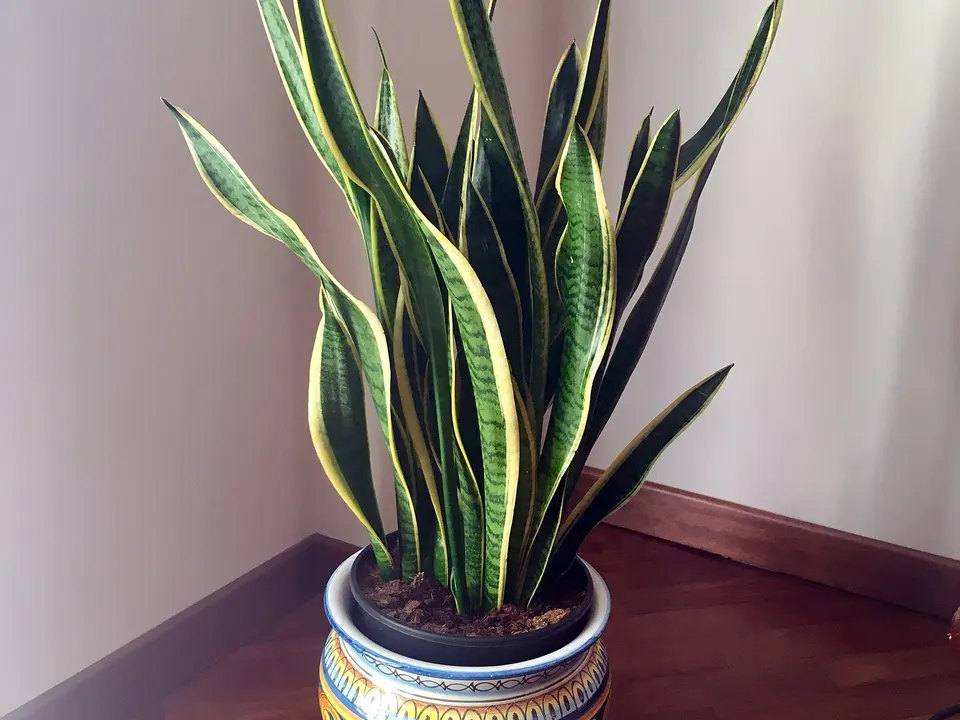
Snake plant care at a glance
| Light | Bright, indirect light is best; tolerates low light |
|---|---|
| Watering | Only once the soil is dry; less in winter |
| Soil and pots | Cactus mix or a mix with perlite; heavy pot with drainage holes |
| Humidity | Normal indoor air is fine |
| Temperature | Tolerates cool rooms down to about 50 °F |
| Feeding | Monthly at half strength in the growing season |
| Propagation | Division is easiest; leaf cuttings also work |
| Size, leaves and flowers | Up to about 4 feet tall; rarely flowers indoors |
| Pets | Toxic to dogs and cats |
Light
- Bright, indirect light is ideal. [1, 2]
- It tolerates low light well, but it grows more slowly there and needs less water. [1, 2]
- Keep it out of hot, direct sun, which can burn the leaves. [1, 2]
Watering
- Water only when the soil has dried out. [1, 3]
- As a rough guide, that is every 2 to 4 weeks in spring and summer and every 4 to 6 weeks in fall and winter. NC State Extension says every one to two months in winter. [2, 3]
- The more light the plant gets, the more often it needs water. [2]
- Overwatering is its main enemy: soil that stays wet rots the roots and can make the leaves soggy. [1, 2, 3, 4]
- It copes well with being forgotten. Penn State says it can go a month or so without water. [1]
Soil and pots
- Use a well-drained mix: a cactus potting mix, or a potting mix with perlite added. [1, 3]
- Use only pots with drainage holes, so the soil doesn’t stay soggy. [1]
- Choose a heavy pot for tall plants. The leaves are heavy and can tip the pot over, especially when the soil is dry. [1]
- It doesn’t mind a snug pot, but a badly rootbound plant can crack a clay pot. [1]
- Repot with fresh mix about every 5 years. Small types such as ‘Hahnii’ may need it every 3 years. [1]
Humidity
- It tolerates low humidity and doesn’t need extra humidity. [2, 3]
Temperature
- It tolerates cool temperatures of around 50 °F. [3]
- Outdoors it is hardy only in USDA zones 10a to 12b, the warmest parts of the country. [3]
Feeding
- For a stronger plant, feed monthly during the growing season with an all-purpose fertilizer at half strength. [1]
Propagation
- After a few years the plant makes offsets (new plants at its base). [1]
- Division is the easiest method: take the plant out of the pot, separate the plants and repot them in fresh mix. [1, 3]
- Leaf cuttings can also start new plants. [1]
Size, leaves and flowers
- The common snake plant grows up to about 4 feet tall, with stiff, upright, sword-like leaves that grow in clusters. [1, 3]
- Leaves can be up to 4 feet long and 2 to 4 inches wide, banded in light and dark green. [1, 3]
- It rarely flowers indoors. When it does, the flowers are small, greenish-white, sticky and fragrant. [3]
- Dust the leaves now and then. Cut a damaged leaf off at soil level. [1]
Is a snake plant toxic to pets?
- The ASPCA lists the snake plant as toxic to dogs and cats. It contains saponins. [1, 5]
- Signs after a pet eats it include nausea, vomiting and diarrhea. [5]
- NC State Extension adds that the sap can irritate skin. [3]
Compare with other plants in our pet-safe houseplant checker.
Snake plant varieties
| Variety | What it looks like |
|---|---|
| Common snake plant | Green leaves with irregular, darker green horizontal bands. Up to about 4 feet tall. [1, 2] |
| 'Laurentii' | Banded green leaves with bright yellow edges. [1, 2, 3] |
| 'Moonshine' | Silvery-gray to silvery-green leaves with a narrow dark green edge. [2, 3] |
| 'Bantel's Sensation' | Narrow leaves with white vertical stripes. About 36 inches tall. [1, 3] |
| 'Hahnii' (bird's nest snake plant) | Dwarf rosette about 6 inches tall; small enough for a desk or shelf. [1, 3] |
| 'Golden Hahnii' | Dwarf rosette with broad golden edges, up to 7 inches tall. [1] |
| 'Twisted Sister' | Twisting leaves marked yellow-gold and green. [3] |
| Cylindrical snake plant (Dracaena angolensis) | Round, tube-shaped leaves with sharp tips. Some plants spread up to 3 feet beyond the pot. [1, 2] |
| Whale fin (Dracaena masoniana) | Wide, paddle-like leaves up to 10 inches wide and 4 feet long. [1] |
Common snake plant problems
| What you see | Usual cause |
|---|---|
| Root rot, soggy leaves | Watering too often, or soil that stays wet. [1, 2, 3] |
| Burned leaves | Hot, direct sun. [1, 2] |
| Plant tips over | Tall leaves in a light pot, especially when the soil is dry. Use a heavy pot. [1] |
| Pests | Few problems, but watch for mealybugs and spider mites. [1, 3] |
Not sure what's wrong? Use the plant doctor to match what you see to a cause.
Questions people ask
How often should I water a snake plant?
Only when the soil has dried out. That is usually every 2 to 4 weeks in spring and summer and every 4 to 6 weeks in fall and winter, and less often in low light. [1, 2]
Is a snake plant a succulent?
Yes. Penn State Extension calls it a succulent houseplant, and NC State Extension describes its stiff, fleshy leaves as succulent. Water it only once the soil is dry. [1, 3]
What soil is best for a snake plant?
A well-drained mix: a cactus potting mix, or a regular potting mix with perlite added, in a pot with drainage holes. [1, 3]
Can a snake plant live indoors in low light?
Yes. It is one of the most recommended plants for low light. It grows more slowly there and needs less water, but bright, indirect light is best. [1, 2, 4]
Is sansevieria the same as a snake plant?
Yes. The snake plant used to be called Sansevieria trifasciata. In 2017 botanists moved it into the genus Dracaena, so its name is now Dracaena trifasciata. [1, 2, 3]
Is a snake plant safe for cats and dogs?
No. The ASPCA lists it as toxic to dogs and cats. Eating it can cause nausea, vomiting and diarrhea. [5]
Sources
Facts on this page were checked against these sources on November 12, 2026. The wording is our own.
- Snake Plant: A Forgiving, Low-maintenance Houseplant. Penn State Extension. Updated Sep 20, 2023.
- Exciting Houseplant Selections for Beginners. Clemson Cooperative Extension, Home & Garden Information Center. Jul 28, 2025.
- Dracaena trifasciata (Snake Plant). NC State Extension, Extension Gardener Plant Toolbox.
- Dependable & Durable Houseplants. University of Wisconsin–Madison Extension, Wisconsin Horticulture. Dec 8, 2025.
- Toxic and Non-Toxic Plants: Snake Plant. ASPCA Animal Poison Control.
Spotted a mistake? Report an error and we'll check it against the sources and update the page.