Peace lily care: light, watering and getting it to bloom
Short answer
Peace lilies grow best in bright, indirect light but tolerate low light, and they’re one of the few foliage plants that will flower there. Keep the soil moist but not soggy, letting it dry slightly between waterings. Aim for 68–85 °F by day, feed very lightly in spring and summer, and keep it away from pets and children: it’s toxic if eaten.[1, 2]
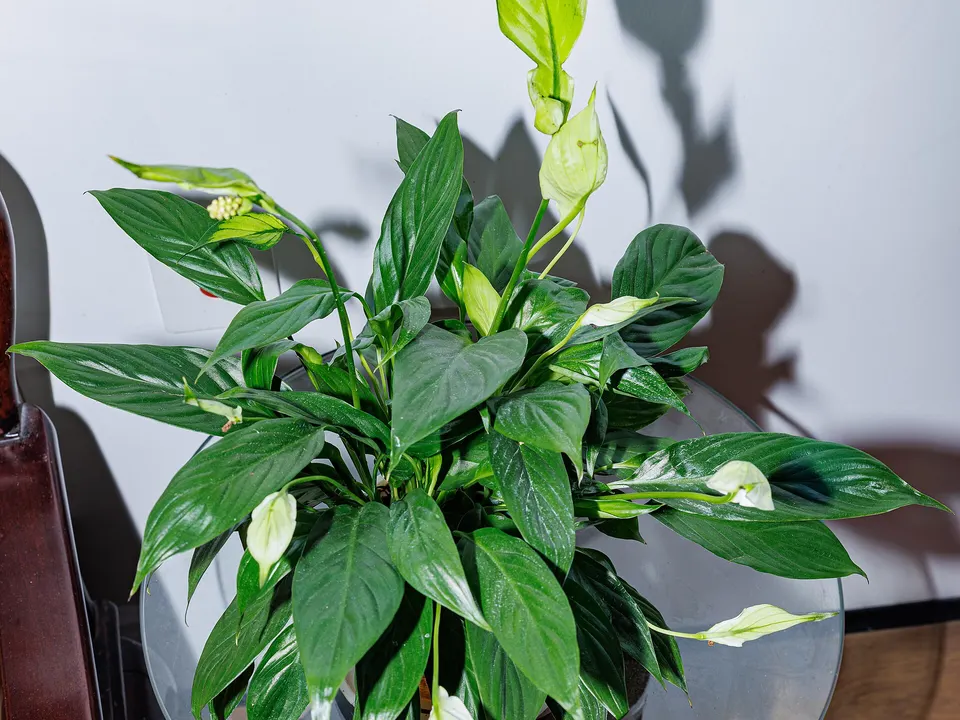
Peace lily care at a glance
| Light | Bright, indirect light; tolerates low light |
|---|---|
| Watering | Moist but not soggy; dry slightly between waterings |
| Soil and pots | Almost any well-drained potting mix |
| Temperature | 68–85 °F by day, about 10 °F cooler at night |
| Feeding | Very little: every 6–8 weeks in spring and summer |
| Repotting | When roots circle the surface or poke out |
| Flowers, leaves and size | White blooms; wipe leaves; 1–4 feet |
| Pets | Yes: toxic to cats, dogs and children if eaten |
Light
- It grows best in bright, indirect light but tolerates low light. [1]
- Keep it out of direct sun: the heat scorches the leaves. [1]
- It is one of the few foliage plants that will flower in low light. [1]
Watering
- Keep the soil moist but not soggy, and let it dry out slightly between waterings. [1]
- Use room-temperature water, and never leave the pot sitting in a saucer of water. [1]
- If the soil dries out too much, the plant wilts and the leaf edges turn yellow. [1]
- Overwatering causes root and stem diseases, the most common peace lily problem. [1]
Soil and pots
- It does well in almost any well-drained potting mix. [1]
Temperature
- It prefers warm days of 68–85 °F and nights about 10 °F cooler. [1]
- Avoid temperatures below 60 °F, which can cause cold damage. [1]
- Keep it out of the direct blast of heating or air-conditioning vents. [1]
Feeding
- It needs very little fertilizer: a balanced liquid houseplant fertilizer (such as 20-20-20) at a quarter of the label strength, every six to eight weeks in spring and summer. [1]
- Too much fertilizer burns the leaf tips and roots brown. [1]
Repotting
- It likes to be slightly pot-bound. [1]
- Repot when roots grow out of the drainage holes or circle on top of the soil. [1]
- Choose a pot only 1–2 inches wider: a much bigger pot can keep the mix too wet. [1]
- You can repot any time of year, but it recovers faster during the growing season. [1]
Flowers, leaves and size
- It periodically produces lightly fragrant white flowers like calla lilies, which turn pale green as they age. [1]
- No flowers usually means the plant is less than a year old or isn’t getting enough light. [1]
- The wide, glossy leaves collect dust, so wipe them regularly with a damp cloth. [1]
- Peace lilies aren’t true lilies: they belong to the arum family (Araceae). [1]
- Most grow 1–4 feet tall and wide; a few cultivars reach 6 feet. [1]
Is a peace lily toxic to pets?
- It contains insoluble calcium oxalate crystals. [1, 2]
- In cats and dogs, chewing it causes intense burning and irritation of the mouth, tongue and lips, drooling, vomiting and difficulty swallowing. [2]
- In children, the most common effect is burning of the mouth, throat and tongue. [1]
- Keep it out of reach of pets and children. If a pet eats some, call your vet or the ASPCA Animal Poison Control Center, (888) 426-4435. [1, 2]
Compare with other plants in our pet-safe houseplant checker.
Peace lily varieties
| Variety | What it looks like |
|---|---|
| 'Little Angel' | Dwarf and compact, 12–15 inches tall. [1] |
| 'Wallisii' | Delicate 3-inch blooms on a plant 12–15 inches tall. [1] |
| 'Starlight' | Shiny, tough, dark green leaves; 12–18 inches. [1] |
| 'Jetty' | Lush, glossy leaves and long-lasting white flowers; 19–24 inches. [1] |
| 'Allison' | Compact, with medium-sized dark green leaves; about 24 inches. [1] |
| 'Domino' | Ruffled dark green leaves streaked with white; about 30 inches. [1] |
| 'Mauna Loa Supreme' | Glossy, lance-shaped leaves; 2–3 feet. [1] |
| 'Sensation' | The largest common peace lily, up to 6 feet tall and wide. [1] |
Common peace lily problems
| What you see | Usual cause |
|---|---|
| Drooping, with yellow leaf edges | The soil dried out too much. [1] |
| Brown leaf tips or edges | Too much fertilizer, or the soil drying out too much. [1] |
| Rotting roots or stems | Overwatering. [1] |
| Yellow between green veins, stunted growth | Magnesium deficiency. [1] |
| No flowers | Plant under a year old, or too little light. [1] |
| Pests | Fungus gnats, mealybugs, spider mites and scale. [1] |
Not sure what's wrong? Use the plant doctor to match what you see to a cause.
Questions people ask
Why is my peace lily drooping?
Usually because the soil has dried out too much: the plant wilts and the leaf edges turn yellow. Water it, and keep the soil moist but not soggy from then on. [1]
Why won’t my peace lily flower?
Most often the plant is less than a year old or isn’t getting enough light. Bright, indirect light helps. [1]
Is a peace lily toxic to cats and dogs?
Yes. Its calcium oxalate crystals cause intense mouth irritation, drooling, vomiting and trouble swallowing in cats and dogs. [2]
Why are my peace lily’s leaf tips brown?
Usually too much fertilizer or the soil drying out too much. Feed only every six to eight weeks in spring and summer, at a quarter strength. [1]
When should I repot a peace lily?
When roots grow out of the drainage holes or circle on top of the soil. Move it to a pot just 1–2 inches wider. [1]
Sources
Facts on this page were checked against these sources on November 6, 2026. The wording is our own.
- Peace Lily (HGIC 1512). Clemson Cooperative Extension, Home & Garden Information Center. Revised Feb 15, 2022.
- Toxic and Non-Toxic Plants: Peace Lily. ASPCA Animal Poison Control Center.
Spotted a mistake? Report an error and we'll check it against the sources and update the page.